
Oscietra Royal
Acipenser gueldenstaedtii
Medium grain · amber to nutty brown
not currently availableNutty, buttery, with a fine marine depth and a long finish — the connoisseur's favourite and a timeless introduction to the art of caviar.

Years pass before a sturgeon yields its roe. And it takes experience to refine it at precisely the right instant. Here you will find hand-picked varieties in Malossol quality — lightly salted, so each grain can speak for itself.
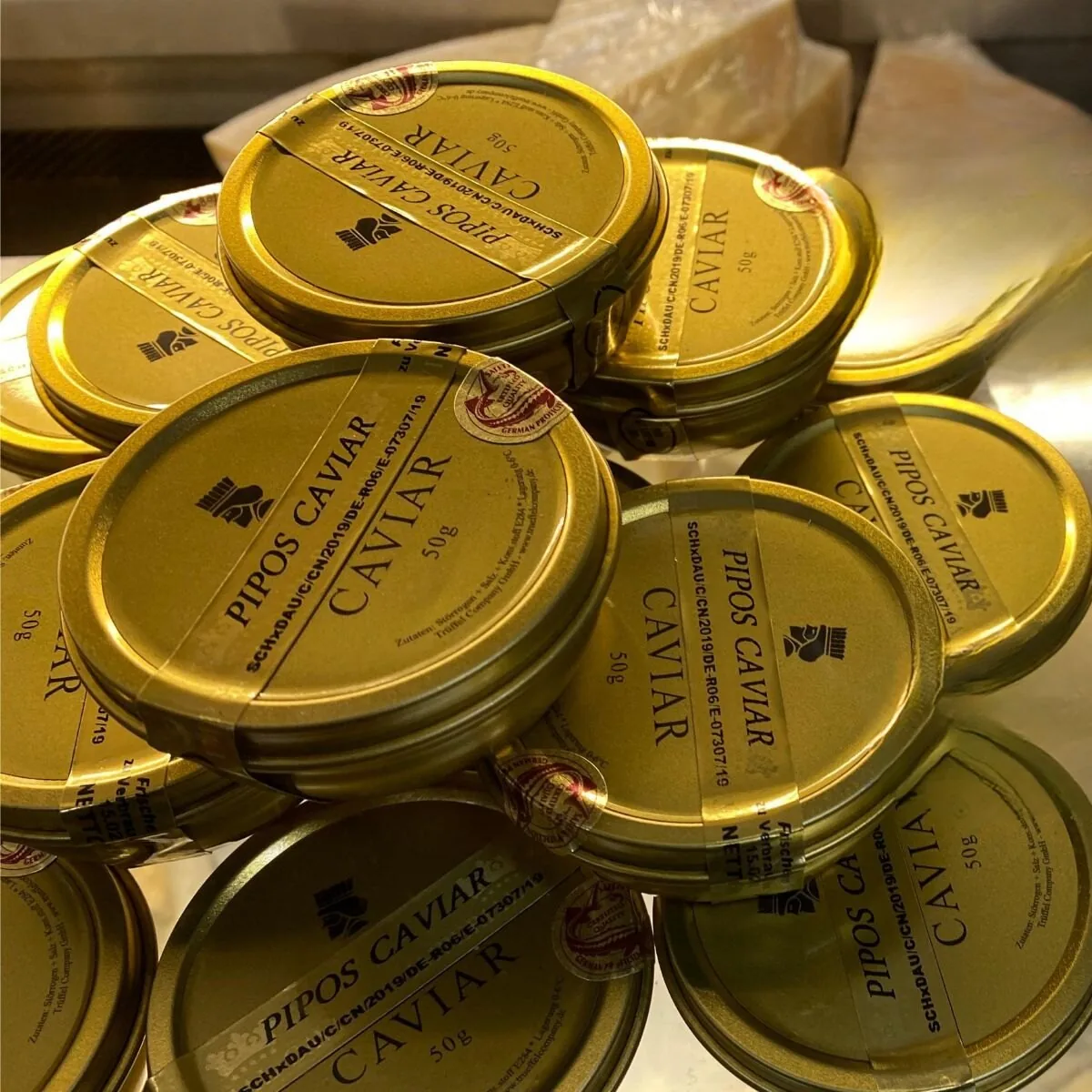
Availability is updated daily. Ask me about current freshness and provenance — with caviar, every day counts.
Acipenser gueldenstaedtii
Medium grain · amber to nutty brown
not currently availableNutty, buttery, with a fine marine depth and a long finish — the connoisseur's favourite and a timeless introduction to the art of caviar.
Huso huso
Largest grain · shimmering light grey
available from 01.12.2026Creamy-mild and melt-in-the-mouth, with large, iridescent pearl-like grains — the rarest and most precious caviar. Savour it pure, on the back of your hand.
Acipenser stellatus
Small, dark grain
not currently availableBold and intense, with a pronounced oceanic character — for those who love the taste of the sea in its purest, most uncompromising form.
Acipenser baerii
Smooth grain · dark
not currently availableMildly nutty and wonderfully well-balanced — an elegant, approachable caviar that reveals its full finesse without demanding anything of the palate.
Caviar is the salted roe of the sturgeon. The word Malossol comes from Russian and means “lightly salted”: the salt preserves the roe but should never take the lead. The more sparingly it is salted, the more clearly you taste the grain itself – and the more freshness matters. Here you will find caviar in Malossol quality.
You can recognise good caviar by four things:
The varieties above differ mainly in grain size and intensity – from mild and nutty to bold and distinctly marine. If you are trying caviar for the first time, start with a mild variety; if you love a pronounced taste of the sea, choose a bolder one. The cards show, updated daily, which variety is in right now. In the shop I am happy to advise you in person.
Caviar is a fresh product. It belongs in the coldest part of the fridge, usually at the bottom just above the vegetable drawer; ideally just above zero degrees Celsius.
Caviar is not eaten by the spoonful like a dessert – just a few grams carry a lot of flavour. As a rule of thumb:
For a larger occasion, I am happy to work out the amount with you in the shop.
Caviar calls for something dry and fresh with fine acidity. The classics are a dry Champagne or an ice-cold vodka. From my range I like to recommend an Italian sparkling wine made by the Metodo Classico: for example Chiaror sul Masso from Cascina I Carpini, a Pas Dosé from Timorasso grown in the Colli Tortonesi in Piedmont – aged 36 months and without dosage, so completely dry. Also from Piedmont comes the Spumante Bianco Brut Ponte '68 from Fratelli Ponte.
If you prefer still wine, choose a dry, fresh white – from my range, for example, a Timorasso from Cascina I Carpini or a Lugana from Lake Garda. Tannic red wines are best avoided: with caviar they quickly taste metallic. What is available right now is on my wine list.
You can buy caviar in my shop at Westendstraße 250 in Munich. The cards above show, updated daily, which varieties are in. I will tell you the daily price on the phone or at the counter – ask me there about the freshness and provenance of the caviar I currently have, too.
Before Christmas and New Year's Eve caviar is especially in demand; it is best to ask a few days ahead which variety is in. Address and opening hours are on the home page.
At Pippo's Natur-Feinkost, Westendstraße 250, 80686 Munich. The cards on this page show, updated daily, which varieties are in; I will tell you the daily price on the phone or at the counter.
Malossol comes from Russian and means “lightly salted”. The roe is salted only sparingly so that the grain keeps its own flavour. Here you will find caviar in Malossol quality.
As a rule of thumb, 10 to 15 grams for tasting or on canapés, 20 to 30 grams as a starter with blini, and around 50 grams when pure caviar is the centrepiece.
Unopened until the date on the tin, in the coldest part of the fridge. Once opened, eat it ideally the same day and at the latest within two days. Freezing damages the grain.
Something dry and fresh: a dry Champagne or an Italian Metodo Classico such as Chiaror sul Masso, a Pas Dosé from Timorasso. A fresh white wine or an ice-cold vodka also work. Tannic red wines are best avoided.
The quickest way to find out about availability and daily prices is to ask me directly. Call or come by — I will be happy to advise you in person.